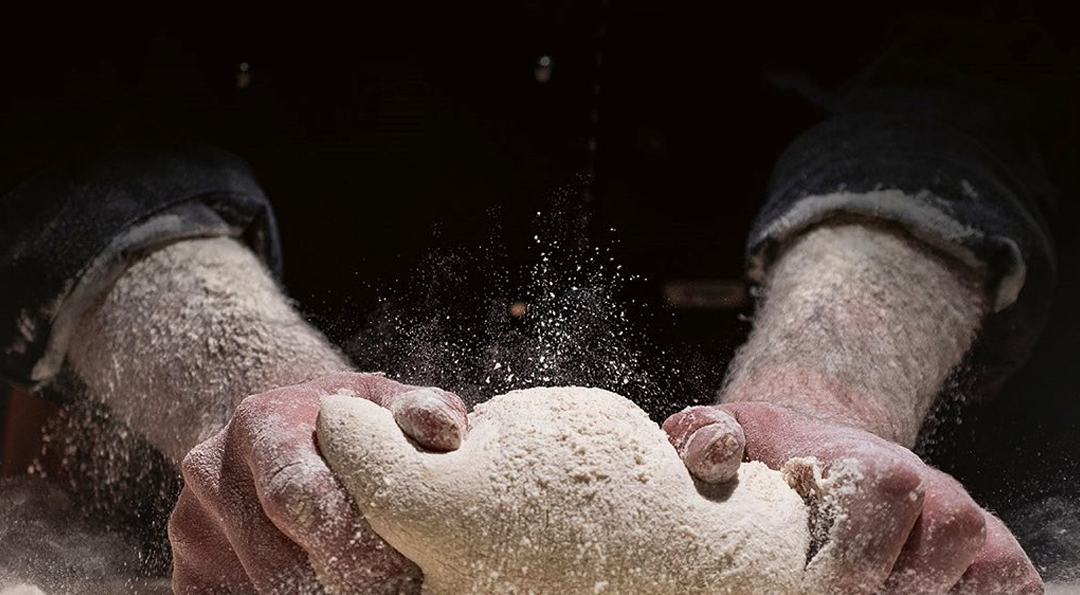
One day the dough stretches beautifully. The next, it tears. It feels tighter. It proofs differently. It bakes slightly darker or lighter. The recipe hasn’t changed. The flour is the same. The oven is stable. Yet the dough behaves differently. Inconsistent dough is one of the most frustrating issues in a pizza kitchen because it affects everything downstream. Learn in this article about commercial dough mixing consistency and the equipment brands that will help you achieve it.
Dough is sensitive to small variations.
Hydration accuracy.
Mixing time.
Water temperature.
Batch size.
Operator judgement.
Manual adjustments that seem minor can significantly change gluten development and final structure. Even slight inconsistencies in mixing energy can alter how the dough handles later in service.
This is why commercial dough mixing consistency is not just about ingredients. It is about process control.
Hydration is often discussed as a percentage, but in practice it is a precision issue.
Under-measured water changes extensibility.
Over-mixing tightens structure.
Under-mixing weakens development.
Professional spiral mixers from ItalMix are designed to provide controlled mixing action that develops gluten efficiently without overheating the dough. Consistent mixing speed and bowl rotation create repeatable structure across batches.
That repeatability removes guesswork.

As production scales, small inaccuracies multiply.
Larger batches increase friction.
Mixing times shift.
Dough temperature rises faster.
Equipment from Sigma is built to manage larger production volumes while maintaining controlled mixing energy. For operators producing dough daily, consistent mechanical action becomes the foundation of stable results.
Consistency at this stage means fewer adjustments later.

Mixing is only the first stage. Poor batch consistency affects portioning, proofing and final bake.
This is where supporting equipment from Vitella helps standardise output further. When dough structure is consistent from the mixer, dividing and rounding processes become more predictable and less reliant on manual correction.
Commercial dough mixing consistency supports the entire workflow, not just the mixing stage.

If dough behaviour varies daily, consider:
Is water temperature being measured consistently?
Are mixing times logged and controlled?
Does batch size change during busy periods?
Is the mixer suited to your production volume?
Is friction heat raising final dough temperature?
Inconsistent dough is rarely random. It is usually the result of uncontrolled variables in the mixing process.
Experienced operators often rely on feel. But as teams grow and production increases, relying purely on judgement becomes harder to manage.
Standardising the mixing stage through appropriate commercial equipment reduces dependency on individual interpretation.
The result:
More predictable fermentation
More consistent stretch
Stable bake performance
Fewer mid-service adjustments
When dough behaves differently day to day, it creates pressure throughout the kitchen.
By focusing on commercial dough mixing consistency, operators regain control at the earliest stage of production.
Stable mixing leads to stable proofing.
Stable proofing leads to stable baking.
Stable baking leads to consistent service.
And consistency is what keeps customers coming back.
